
Tuesday, 2 August 2011
Ooh look
It's doing it again:
 (I'm rather proud of that photograph - you can't deny it's an improvement on this).

Monday, 1 August 2011
From the Tattered Archive
As well as photographs, I often cut out poems I like from magazines - usually the New Yorker. Looking through the folder I keep them in this morning, I found this one by a poet called Stephen Dunn, from August 24, 2009. I like poems and stories about clowns, because I find them so mysterious - although meant to be comic figures, they embody melancholy for me.
If a Clown
If a clown came out of the woods,
a standard-looking clown with oversized
polka-dot clothes, floppy shoes,
a red, bulbous nose, and you saw him
on the edge of your property,
there'd be nothing funny about that,
would there? A bear might be preferable,
especially if black and berry-driven.
And if this clown began waving his hands
with those big white gloves
that clowns wear, and you realized
he wanted your attention, had something
apparently urgent to tell you,
would you pivot and run frrom him,
or stay put, as my friend did, who seemed
to understand here was a clown
who didn't know where he was,
a clown without a context?
What could be sadder, my friend thought,
than a clown in need of a context?
If then the clown said to you
that he was on his way to a kid's
birthday party, his car had broken down,
and he needed a ride, would you give
him one? Or would the connection
between the comic and the appalling,
as it pertained to clowns, be suddenly so clear
that you'd be paralyzed by it?
And if you were the clown, and my friend
hesitated, as he did, would you make
a sad face, and with an enormous finger
wipe away an imaginary tear? How far
would you trust your art? I can tell you
it worked. Most of the guests had gone
when my friend and the clown drove up,
and the family was angry. But the clown
twisted a balloon into the shape of a bird
and gave it to the kid, who smiled,
let it rise to the ceiling. If you were the kid,
the birthday boy, what from then on
would be your relationship with disappointment?
With joy? Whom would you blame or extoll?
If a Clown
If a clown came out of the woods,
a standard-looking clown with oversized
polka-dot clothes, floppy shoes,
a red, bulbous nose, and you saw him
on the edge of your property,
there'd be nothing funny about that,
would there? A bear might be preferable,
especially if black and berry-driven.
And if this clown began waving his hands
with those big white gloves
that clowns wear, and you realized
he wanted your attention, had something
apparently urgent to tell you,
would you pivot and run frrom him,
or stay put, as my friend did, who seemed
to understand here was a clown
who didn't know where he was,
a clown without a context?
What could be sadder, my friend thought,
than a clown in need of a context?
If then the clown said to you
that he was on his way to a kid's
birthday party, his car had broken down,
and he needed a ride, would you give
him one? Or would the connection
between the comic and the appalling,
as it pertained to clowns, be suddenly so clear
that you'd be paralyzed by it?
And if you were the clown, and my friend
hesitated, as he did, would you make
a sad face, and with an enormous finger
wipe away an imaginary tear? How far
would you trust your art? I can tell you
it worked. Most of the guests had gone
when my friend and the clown drove up,
and the family was angry. But the clown
twisted a balloon into the shape of a bird
and gave it to the kid, who smiled,
let it rise to the ceiling. If you were the kid,
the birthday boy, what from then on
would be your relationship with disappointment?
With joy? Whom would you blame or extoll?
Sunday, 31 July 2011
The Sage of Ainslie
Sitting in the Paragon Cafe the other day, on the way to Sydney, I finished my rather tiny bowl of soup and began eyeing off my husband's toasted sandwiches. Without a word spoken by me, the noble man to whom the sandwiches belonged - yes, the same one who brought you Australia v Britain - handed me one of the three triangles remaining on his plate of ham, cheese and tomato sandwiches (it would have been too much to ask to expect him to offer any of the toasted chicken variety, since there was only one of those left). 'It is a truth universally acknowledged,' he said as he did so, 'that a woman in possession of a husband will always under-order and then pinch bits from her husband's plate.'
While his memory of Austen's wording may not have been entirely accurate, the substance of his statement was undeniable. A brief glance around the restaurant proved that. On all sides, women were sneaking chips off the plates of their menfolk and even holding out their plates like begging bowls, hoping to be given, 'just a tiny taste', 'a sliver of the corner, just so I can see what it's like'.
While his memory of Austen's wording may not have been entirely accurate, the substance of his statement was undeniable. A brief glance around the restaurant proved that. On all sides, women were sneaking chips off the plates of their menfolk and even holding out their plates like begging bowls, hoping to be given, 'just a tiny taste', 'a sliver of the corner, just so I can see what it's like'.
Saturday, 30 July 2011
Lonely as a Cloud
It is late afternoon at the Chelsea Froebel School. Outside the window, the playground is no longer visible. Darkness and fog have together swallowed it. We don't notice. We are singing. We stand in four lines on one side of the big downstairs classroom, facing Mrs Godley's back. She is at the piano, her hands galloping over the keys. We belt out the last notes of our song and she smashes her fingers down to produce the crashing final chords.
There is a moment of quiet and then she swings round to look at us. My heart sinks. I can guess what is coming. 'Marvellous,' she cries - unlike any choir mistress I ever encounter afterwards, she believes in the power of encouragement - 'magnficent effort - you all deserve a reward.'
And already I know what that reward will be. It will be the same thing it always is. It will be the chance to choose a song ourselves.
'"The Bird-catcher's Song"', I mutter, 'or "Down Yonder Green Valley"?' But it is no good. With one voice the rest of the school roars out its decision, not one soul dissenting, except for me.
My so-called best friend, Susan Fisher, gives me a triumphant grin as Mrs Godley turns back to her instrument - for being best friends doesn't mean you actually like each other and, since she not only pinched my pet rubber, (doesn't everybody have one?), whose name was Ariel, because that was what was printed across its front, but also attacked the poor thing with a compass in an attempt to remove the incriminating lettering, we do actually hate each other, (although, of course, looking back now, I see how trivial and petty such concerns were, hem, hem, hem, hem - what me, hold grudges?)
The decision is unanimous. The consensus is overwhelming. It is also completely baffling. As my companions launch into the opening lines of their beloved ditty, I experience for the first time the true loneliness of being human. "What shall we do with the drunken sailor?" they belt out with gusto. Why do they like it? "What shall we do with the drunken sailor?" Why don't I? "What shall we do with the drunken sailor earl-ay in the morning?"
And on they go, roaring out ever nastier suggestions for the handling of the inebriated mariner - "Put him in the bilge and make him drink it", "Beat him with a stick until his back is bleeding", "Put him in the scuppers with a hose-pipe on him" - their relish increasing with each new ghastly idea .
I am seven years old and, surrounded by my classmates, I feel as solitary as perhaps I ever will.
There is a moment of quiet and then she swings round to look at us. My heart sinks. I can guess what is coming. 'Marvellous,' she cries - unlike any choir mistress I ever encounter afterwards, she believes in the power of encouragement - 'magnficent effort - you all deserve a reward.'
And already I know what that reward will be. It will be the same thing it always is. It will be the chance to choose a song ourselves.
'"The Bird-catcher's Song"', I mutter, 'or "Down Yonder Green Valley"?' But it is no good. With one voice the rest of the school roars out its decision, not one soul dissenting, except for me.
My so-called best friend, Susan Fisher, gives me a triumphant grin as Mrs Godley turns back to her instrument - for being best friends doesn't mean you actually like each other and, since she not only pinched my pet rubber, (doesn't everybody have one?), whose name was Ariel, because that was what was printed across its front, but also attacked the poor thing with a compass in an attempt to remove the incriminating lettering, we do actually hate each other, (although, of course, looking back now, I see how trivial and petty such concerns were, hem, hem, hem, hem - what me, hold grudges?)
The decision is unanimous. The consensus is overwhelming. It is also completely baffling. As my companions launch into the opening lines of their beloved ditty, I experience for the first time the true loneliness of being human. "What shall we do with the drunken sailor?" they belt out with gusto. Why do they like it? "What shall we do with the drunken sailor?" Why don't I? "What shall we do with the drunken sailor earl-ay in the morning?"
And on they go, roaring out ever nastier suggestions for the handling of the inebriated mariner - "Put him in the bilge and make him drink it", "Beat him with a stick until his back is bleeding", "Put him in the scuppers with a hose-pipe on him" - their relish increasing with each new ghastly idea .
I am seven years old and, surrounded by my classmates, I feel as solitary as perhaps I ever will.
Friday, 29 July 2011
Words and Phrases that Make Me Laugh
We have been having a new roof put on our house. The man who is doing it enjoys his job and can talk for ages about what he's doing each day. He's almost finished now though, as he told my husband this morning. 'Yeah mate, it'll be good for you to have closure', he said. Where did he pick up that word 'closure'? It seems to me to come straight from the world of therapy, but he doesn't seem at all the kind of person to have done any therapy. Perhaps, though, he just means 'closure', as in the hole in the roof will finally be closed?
Thursday, 28 July 2011
Flowers Please
Following the death on Tuesday of Margaret Olley, (who was among other things a great supporter of the wonderful National Art School - one of the few art schools left, as she pointed out, where you don't spend four days a week talking about making art and only a day actually making it), the Australian printed a picture of her by Jeffrey Smart. What surprised me about the painting, given that it seemed to be in many ways a realistic one, (the Margaret Olley figure is certainly recognisably Margaret Olley), was the complete lack of any sign of crowds:

According to the caption, Smart made it as short a time ago as 1994 - yet last month, when I was in there, the Louvre was like Victoria Station:
Possibly Smart's is a portrait of a dream, rather than of the way things are. Speaking of such things, if my loopy belief in after-life get-togethers, (which I mentioned the other day), is not purely chimeric, the party up there just got better, with Olley's arrival. She and Lucian Freud would probably see eye to eye about most things to do with painting; being a supporter of the monarchists in Australia, she'd have little objection, presumably, to Otto von Hapsburg; and no-one, surely, has ever not got on with Leigh-Fermor. And, now that she's dead, I imagine she can allow herself the odd drink or five.

According to the caption, Smart made it as short a time ago as 1994 - yet last month, when I was in there, the Louvre was like Victoria Station:
Possibly Smart's is a portrait of a dream, rather than of the way things are. Speaking of such things, if my loopy belief in after-life get-togethers, (which I mentioned the other day), is not purely chimeric, the party up there just got better, with Olley's arrival. She and Lucian Freud would probably see eye to eye about most things to do with painting; being a supporter of the monarchists in Australia, she'd have little objection, presumably, to Otto von Hapsburg; and no-one, surely, has ever not got on with Leigh-Fermor. And, now that she's dead, I imagine she can allow herself the odd drink or five.
Wednesday, 27 July 2011
Mad Penguin Men
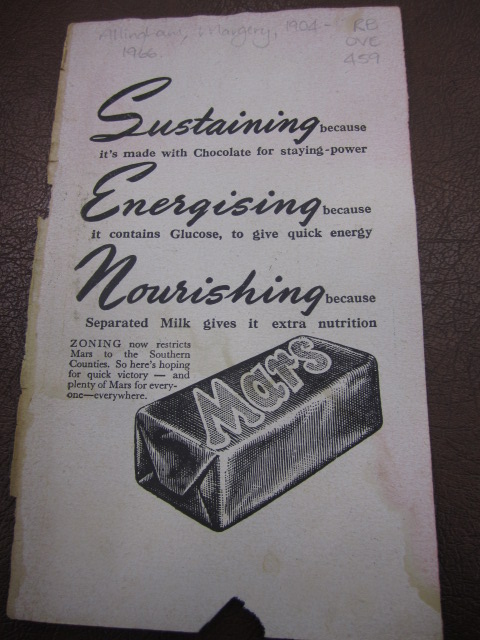
When I got the damaged copy of Black Plumes that I talked about yesterday, I also picked up another Margery Allingham that had managed to hang on to its cover. Surprisingly, instead of leaving the paper blank, or covering it with quotes from reviews or information about the author, Penguin used the extra space for revenue raising via the medium of ads:

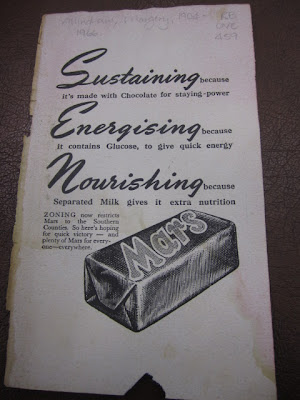 I wonder why this practice disappeared. Maybe, given the problems the book industry is now facing, it might be worth bringing it back into use.
It would be important of course to match products to book content, if the advertisements were to be really effective. The example that springs to mind immediately is Herman Melville's Moby Dick. Surely the narrator's opening statement -
"Whenever I find myself growing grim about the mouth; whenever it is a damp, drizzly November in my soul; whenever I find myself involuntarily pausing before coffin warehouses, and bringing up the rear of every funeral I meet ... I account it high time to get to sea as soon as I can"
- represents a perfect opportunity for a drug company. A well-placed picture on the inside cover - a happy couple, walking arm in arm through rolling country - plus a large letter caption would work wonders, I imagine:
"No need to waste half your life on the high seas - just take Zoloft!"
There must be so many other possibilities. All suggestions welcomed.

It would be important of course to match products to book content, if the advertisements were to be really effective. The example that springs to mind immediately is Herman Melville's Moby Dick. Surely the narrator's opening statement -
"Whenever I find myself growing grim about the mouth; whenever it is a damp, drizzly November in my soul; whenever I find myself involuntarily pausing before coffin warehouses, and bringing up the rear of every funeral I meet ... I account it high time to get to sea as soon as I can"
- represents a perfect opportunity for a drug company. A well-placed picture on the inside cover - a happy couple, walking arm in arm through rolling country - plus a large letter caption would work wonders, I imagine:
"No need to waste half your life on the high seas - just take Zoloft!"
There must be so many other possibilities. All suggestions welcomed.
Subscribe to:
Posts (Atom)