Showing posts with label Margery Allingham. Show all posts

Monday, 27 May 2024

Reading 2024 - Stalled and Stubbed Out

 I went into a reading hiatus after: (a) getting becalmed in the middle of An Awkward Age by Henry James (I will go back to it, but I don't really read James for dialogue and quite frankly if anyone thinks Ivy Compton Burnett was an innovator in her dialogue-heavy approach to novel writing, An Awkward Age suggests to me that in fact she pinched the idea, lock, stock and barrel from Henry James); (b) beginning A Burnt Out Case by Graham Greene and then taking it out of the house to read in a train or a cafe and losing it and feeling cheated and bereft and unable to start any of the many other books around the house. 

Except for those that come under the heading 'detective fiction', of course. I could begin them with no trouble but for some reason I don't count reading detective fiction as real reading, even though I love reading detective fiction - or perhaps because I love reading detective fiction and therefore think it can't be worthwhile? 

Anyway, while I pined for A Burnt Out Case, I read detective fiction. Since about the age of 10, this is what I have done when discouraged. I started with Conan Doyle. Years later I discovered Margery Allingham. Dorothy L Sayers became another favourite. I don't read modern detective novels in which perversions are graphically described. I am reading for comfort and escape and horrible tales of flailing and other horrors just leave me disgusted. 

One author I love very much is Simenon, in his Maigret guise. The world he writes about - mostly Paris streets and bars and unglamorous dwellings - is so carefully observed and vivid and yet there is no showiness to his writing. In fact I realise as I write that what I especially like about the Maigret books is that I get a sense of quietness from them. While waiting for A Burnt Out Case to turn up againI read La Première Enquête de Maigret and Maigret et le Corps sans Tête. In the course of reading them, I was baffled by a conversation with a friend I studied French with who said it was pretentious to read the books in French, whereas I thought it was fun to get the added bonus of new vocabulary - plus the copies I found in a secondhand bookshop were in French, so I had little choice. One day I might be brave enough to read Simenon's non-Maigret novels, but I gather they will not be as reassuring as time spent with the slightly melancholy detective.

In between the Maigrets, I read two Agatha Christies, The Clocks and Five Little Pigs. Christie's style is absolutely nothing to write home about, her characterisation is paper thin, and yet I am totally in awe of her. Despite the limitations of her writing, it is impossible not to recognise her wisdom. Here are two or three insightful lines from the two books I read:

"Extraordinarily tatty hotels always have grand names."

"When discouragement sets in, it's like dry rot."

"She had the enormous mental and moral advantage of a strict Victorian upbringing, denied to us in these days. She had done her duty in that station of life to which it had pleased God to call her, and that assurance encased her in an armour impregnable to the slings and darts of envy, discontent and regret. She had her memories and her small pleasures, made possible by stringent economies, and sufficient health and vigour to make it possible for her still to be interested in life."

I also read some books about a bird watcher and his wife who become semi-amateur detectives. I thought the premise ridiculous but they were written by Ann Cleeves, who is the creator of Vera and of Shetland, and she is another extraordinary writer, capable of making up good stories, untroubled by worrying whether she is creating "literature". 

All these books were concerned with the murder of innocent human beings so I've no idea why they cheered me up. I suppose there may be something in the theory that murder/mysteries give pleasure because the reader experiences an ordered world being disturbed and then order being restored.

Sadly as yet order has not been restored enough for me to find my lost copy of A Burnt Out Case.

Wednesday, 30 May 2012

Battered Penguins - The Case of the Late Pig


As I think I have already conveyed in an earlier post, I love Margery Allingham. I've loved her from the first moment I opened one of her books, but I've loved her even more since I read a short biography of her, which suggested she had a far from easy love life and died a pretty miserable death. How could this be, when she was both funny and wise - and wrote so beautifully?

Allingham's best known creation is Albert Campion, an enigmatic figure, who dabbles in detective work - describing himself thus: "I am not one of these intellectual sleuths, I am afraid. My mind does not work like an adding machine, taking the facts in neatly one by one and doing the work as it goes along. I am more like the bloke with the sack and spiked stick. I collect all the odds and ends I can see and turn out the bag at the lunch hour" - and has a rather large, redeemed ex-criminal as his man-servant, a fellow called Lugg who, as Campion puts it, 'in spite of magnificent qualities has elements of the Oaf about him'.

In The Case of the Late Pig Campion emerges a tiny bit from his usual mysteriousness by telling the story in the first person -  although readers hoping for any real self-revelation will, I should immediately point out, be fairly disappointed. One thing one does learn, however, is that as a child he had a 'collection of skeleton leaves'; another is that he is, despite his reservations, quite devoted to Lugg. In addition, we discover that he was once smitten by a girl called Janet who he has known 'on and off, for twenty-three years. When I first saw her she was bald and pinkly horrible. I was almost sick at the sight of her, and was sent out into the garden until I had recovered my manners.'

As must be obvious from the above, we are not dealing here with an angst-ridden, hard-boiled gumshoe. Angst and hard-boiledness are not at all what Allingham's books are about - or at least not overtly. Instead of grit and horror, what you get in a Campion story is humour and wisdom. While the thread of the mystery ambles through the text, giving it a beginning, middle and end, we do not feel a tremendous urgency about finding its solution. Whodunnit is the genre but it is not what really holds the reader's - or this reader's anyway - main attention.

Instead of excitement and a desperate need to find out the name of the perpetrator, what carries you along in these books is the pleasure of the scenery you pass through. Allingham conjures up a Wooster-like world, full of buildings topped with parapets that 'finish off the flat fronts of Georgian houses and always remind me of the topping of marzipan icing on a very good fruit cake' or fronted by 'great white pillars ... built by an architect who had seen the BM and never forgotten it' - each one 'a millstone round somebody's neck' - and peopled by characters such as 'Guffy Randall' and 'Lofty, who is now holding down his seat in the Peers with a passionate determination more creditable than necessary'.

Onto this framework - and that of the murder story - Allingham then throws amusing observations and rather lovely descriptions such as the ones that follow, switching in tone between flippant and elegiac without apparent effort:

"A funeral is an impressive business even among the marble angels and broken columns of civilization. Here, out of the world in the rain-soaked silence of a forgotten hillside, it was both grim and sad."

"Even at twelve and a half Pig had had several revolting personal habits."

"It is about as easy to describe Whippet as it is to describe water or a sound in the night ... I don't know what he looks like, except that presumably he has a face, since it would be an omission that I should have been certain to observe. He had on some sort of grey-brown coat which merged with the dead cow-parsley and he looked at me with that  vacancy which is yet recognition."

"Leo had very bright blue eyes which, like most soldiers', are of an almost startling innocence of expression."

"...it struck me then as odd that the boy should really be so very much the father of the man. It's a serious thought when you look at some children."

"No English country house is worthy of the name if it is not breathtaking at half past six on a June evening..."

"...the sweet cool fragrance of old wood and flowers which is the true smell of your good country house..."

She adds in exchanges like this one, which reminds me of the kind of conversation I would sometimes have with my father, in which for a moment I glimpsed whole orders of until-then hidden rules for life:

"'What were you playing? Bridge?'
Leo looked scandalising. 'Before lunch? No my dear boy. Poker. Wouldn't play bridge before lunch.'"

Last but not least, she chucks in a villain, who, given her obvious conservatism, (and I should point out that I don't use that word in any kind of hostile way), it is hard not to recognise as such, long before his culpability is eventually confirmed:

"He was a red-hot innovator, we discovered. He spoke with passion of the insanitary condition of the thatched cottages and the necessity of bringing culture into the life of the average villager, betraying, I thought, a lack of acquaintance with either the thatched cottage or, of course, the villager in question, who, as every countryman knows, does not exist."

A wrong un, clearly. Case closed.

In conclusion, if you are looking for a light, diverting book to curl up with on a rainy Sunday, The Case of the Late Pig should certainly fit the bill.

Thursday, 1 December 2011

Battered Penguins XV


I am always happy to read books that tell of murders in English country houses. I understand that the current theory has it that country houses are symbolic of Eden and stories that present the reader with murders that take place in them, complete with investigations leading to the murderer or murderers being brought to justice, are soothing to the spirit, because they suggest that order has been reintroduced into a briefly unstable world. By the end, all is restored to calm, and God - in the shape of the detective - is taking care of things once more.

Possibly that theory does go some way to explaining why I find these kinds of books pleasurable. However, after reading Hamlet, Revenge! by Michael Innes, I realise that, while it is satisfying to see God put back in charge in the final chapter, I also like to get to know a few appealing human characters along the way.

Michael Innes was an English Literature scholar at Oxford University, and I suspect that Hamlet, Revenge! reveals an extraordinarily neatly devised Hamlet-related structure, if you are familiar enough with the play to recognise that it is there. Certainly the setting of the book, a huge house called Scamnum, in which an amateur production of Hamlet is being mounted, is presented from the perspective of a person steeped in literature: "Mr Pope though he went away to scoff in twenty annihilating couplets, came secretly to admire; and Dr Johnson, when he took tea with the third duke, put on his finest waistcoat ... Thirty years before the birth of Shakespeare " et cetera et cetera.

The book only really gets going when a murder occurs during the first performance of Hamlet at Scamnum. From that moment on, Giles Gott, a writer of murder mysteries, joins forces with Innes's trademark detective, Appleby, to solve the mystery. Sadly, to my mind, the introduction of a writer of detective stories into a novel that is a detective story, a device that I suspect Innes thought was marvellously clever, is just one of the ways in which the book fails through being too clever by half.

For Innes's concoction is utterly brilliant, in the way that a really clever chess game is brilliant, but the dazzling ingenuity of its construction, the (quite possibly to others) glitteringly witty ploy of having a mystery writer within a mystery novel - and characters who make veiled references to other fictional detectives as if they were actual:  '"... in my opinion the Duke should send for a detective." "A detective?" said Noel politely from across the table. "You mean a real detective - not like the police?" "Exactly - a real detective. There is a very good man whose name I forget; a foreginer and very conceited ..."' - such things do not provide enough sustenance to make the reader feel especially warmly toward the novel, in the absence of rich characterisation.

The book does have some quite funny moments - one about advertising, the other about the usual readers at the British Library - and  is full of insights and lovely descriptions, such as the ones that follow:

 "Moving about Scamnum ... was like moving in a dream through some monstrously overgrown issue of Country Life"

"Some unidentifiable South London common was slipping past, at once banal and mysterious under the garish London sky. Far to the east a train whistled - the profoundly disturbing whistle of a train in the night."


"'Quite so,' said Gott - and assumed that charming, charmed and tentatively understanding expression which is the Englishman's defence .."


"In the farther park two textures of moving grey were sorting themselves out: mist drifting, eddying, dispersing; sheep beginning to move in the dewy feed. Already the day declared its season; already the scent of the syringas, heavy as orange-blossom, was blowing up from the gardens. The hubbub dawn-chorus had tuned to distinguishable notes: willow-warblers montononously tumbling downstairs, chaffinches as unvaryingly revving-up, and suspense provided only by the wrens, who pleased themselves as to whether or not they should add answer to question." 


It also includes one passage of such amazing prescience that it is difficult to believe it was really written as long ago as 1937:


"Appleby drew deep breaths of June air as he went briskly down the drive. The summer was advanced in this southland country; from somewhere came the scent of the first hay and already the oak-leaves were darkening. Over his left shoulder he looked up at Horton Hill. Across the crown there must be some right-of-way, for no attempt had been made to eject the people gathering there. It was quite a crowd now: idlers in the neighbouring towns, reading the stimulating news in their morning paper, had hurried to get out the car and motor over to see what they could. And soon there would be similar arrivals from London; people 'running down for the day'. And portents these, thought Appleby, of a society running down in another sense: clogged by its own mass-production of individuals who, let loose from a day's or a lifetime's specialized routine, will neither think nor read nor practise any craft, but only gape."

What it doesn't have though is characters one can care much about. The Duke and Duchess are not merely cardboard, but rice paper, the young female love interest appears to have barely any interior life and the cast of extras are caricatures mainly. Of the two male leads, one couches a lot of his interpretations of what he sees within the framework of the ballet he'd been watching before being called back to work, (which, as I hate 'dance', is not a trait that endears the man to me), and the other is perfectly nice but lacks any especially charming or interesting trait, (unless you count the writing of detective mysteries), that might give the reader an insight into his soul or a reason to feel some sympathy with him.

Where Albert Campion, in Margery Allingham's books, remains constantly intriguing and Gervase Fen, in Edmund Crispin's, is consistently absurd, Gott, although somewhat worried about whether he will get the girl he wants to marry, is essentially unneurotic and very self-confident and Appleby seems to be equipped with few emotions. As a resul,t it is hard to feel particularly involved with either of them. Consequently, the book gives readers the sense that they are observing a pretty puzzle clicking neatly into place, a puzzle devised by an academic mind that hopes to entice with country house furnishings but is unable to bring the puppets he's invented into true, lovable life. The repeated arch references to fictional detective novels within this detective novel, although perhaps intended as some kind of mirror to the play within a play in Hamlet, do nothing to add to the work's charm. Although there is a great deal to like and admire in Hamlet, Revenge! - the plotting, in particular, is immensely clever - what is slightly lacking, sadly, is the warmth that might bring such a well-engineered machine to life.


Wednesday, 27 July 2011

Mad Penguin Men

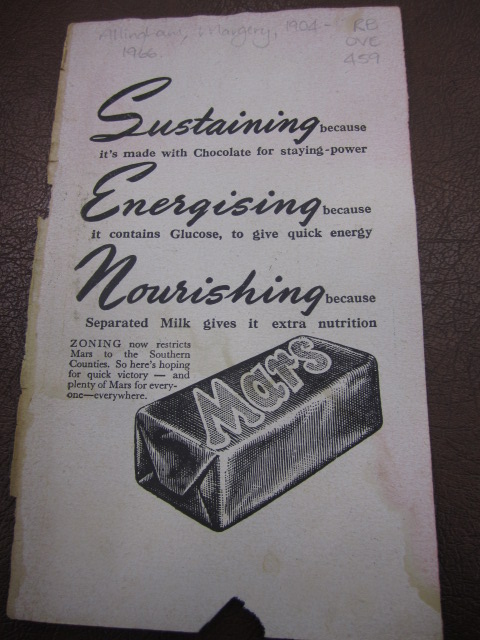
When I got the damaged copy of Black Plumes that I talked about yesterday, I also picked up another Margery Allingham that had managed to hang on to its cover. Surprisingly, instead of leaving the paper blank, or covering it with quotes from reviews or information about the author, Penguin used the extra space for revenue raising via the medium of ads:

I wonder why this practice disappeared. Maybe, given the problems the book industry is now facing, it might be worth bringing it back into use.

It would be important of course to match products to book content, if the advertisements were to be really effective. The example that springs to mind immediately is Herman Melville's Moby Dick. Surely the narrator's opening statement -

"Whenever I find myself growing grim about the mouth; whenever it is a damp, drizzly November in my soul; whenever I find myself involuntarily pausing before coffin warehouses, and bringing up the rear of every funeral I meet ... I account it high time to get to sea as soon as I can" 

- represents a perfect opportunity for a drug company. A well-placed picture on the inside cover - a happy couple, walking arm in arm through rolling country  - plus a large letter caption would work wonders, I imagine:

"No need to waste half your life on the high seas - just take Zoloft!"

There must be so many other possibilities. All suggestions welcomed.

Tuesday, 26 July 2011

Battered Penguins IX

Black Plumes by Margery Allingham - so battered that the front cover is missing


Margery Allingham is the creator of Albert Campion, the only fictional detective of whom I'm really fond. It was because of him that I chose Black Plumes to read. However, when I reached page 139 of the book and he still hadn't appeared, it crossed my mind that he might not be going to. It also dawned on me that his absence didn't bother me. It turns out it's not Campion I love; it's Allingham herself.

For Allingham is a chatty, companionable author. All the way through her novels, she is there at your side, sharing wry jokes and wise insights about life in general - "jealousy, that most degrading of emotions", "the erstwhile rose garden looked small and dirty, as such air shafts do in the city," -  and the particular tale she has to tell. She is witty - for instance, she describes a restaurant as "pleasant without being in any way good", (I've been to plenty of those), and has one of her characters explain to another, who feels self-conscious at a night club, "Don't worry, there's not a soul in this room who can spare a second to recognise anyone but themselves".

She is also very good at conjuring vivid visual tableaux - in Black Plumes perhaps the greatest example of these is the funeral from which the title is derived - whose central element is nostalgia. A fondness for the disciplines of the recent past, 'the awe-inspiring commonsense behind the absurdities of that great social code of the day before yesterday', is an essential part of Allingham's work.

Most importantly, of course, for a writer of detective fiction, Allingham tells a good story, and Black Plumes contains one of her better plots. Of course, if you don't share Allingham's passion for an earlier, more elegant era or for larger than life characters who, at least in my imagination, talk like Celia Johnson in Brief Encounter, ("It occurred to Francis that she was going to cry; the discovery appalled her and she rose to her feet, choking"), you will probably find her books unendurable. I, however, love being plunged into Allingham's comfortable imaginary world, which is why I found Black Plumes - and all the other books I've read by her - amusing, intelligent and highly diverting.  If you want to spend a rainy afternoon reading in front of the fire, Black Plumes could be the book for you.