I used to live in Vienna. It is probably the most beautiful liveable city I have ever been in. The buildings are magnificent, the cafes are like completely democratic St James's Street clubs, the public transport is marvellous, everything is gorgeous.
And yet, there is the question of the Viennese. Not all Viennese, of course not, but some Viennese, some attitudes, some things that are allowed to take place with impunity.
Let me give you just one example, which I found hair raising and I still can hardly credit, except that I know that it really did happen.
In the late 1990s, some friends were living in a pretty house in a leafy suburb. Next to their house was a little school for disabled children. Beyond that, was the house of a couple who clearly had a lot of money - Vienna is a bit of a "If you've got it, show it" kind of place, so, if people have money, you do tend to know it. The couple who lived in that house parked their gleaming Porsche outside each evening and dressed immaculately, in the glossy, (even slightly brassy), style of many wealthy Viennese.
The school seemed to be a very good school and, as demand for its services grew, it needed to expand. It applied to the local council to be allowed to use the garden - which was surrounded by a hedge and therefore reasonably private - in front of its building as an extra play area at lunch time for its wards.
When the Porsche owners heard about this, they were horrified. They tried to enlist our friends' support. Our friends would not assist them, but the Porsche owners found others in the street more than willing to go along with their protests.
Together, a band of them took a case to court, arguing that having disabled children arriving and leaving, morning and evening, was bad enough; if they were to be allowed to play at the front of the building as well, this would affect the street's house prices.
The astounding thing, we thought, was that anyone would even conceive of such an outrageously uncompassionate argument. Even more astonishing was the fact that they were prepared to express it, without shame.
But the biggest shock was still to come. The court upheld the Porsche-owners' objections and forced the school to seek alternative premises, somewhere where they would not threaten the potential investment gains of law abiding citizens.
Perhaps it was the memory of this experience that made me less critical of the film called Woman in Gold than the professional critics. Many of them argued that the movie's portrayal of the Austrian authorities trying to retain possession of a painting stolen by the Nazis from a Jewish family was not very nuanced. I enjoyed the film and, while I do, of course, know very decent people who live in Vienna, I fear that the authorities, even though they do come across at times as caricatures, were probably just like that in real life.
Showing posts with label Vienna. Show all posts
Showing posts with label Vienna. Show all posts
Monday, 27 July 2015

Saturday, 7 July 2012
Not Moving Forward
While sometimes I am led astray by my instinctive conservatism, (for instance, I now realise that screwtop wine bottles are great and corks, although traditional, are on a day-to-day basis, a bore), I think, when it comes to the changes wrought on most of my favourite urban landscapes since the 1960s, that a bit more conservatism would have saved us from the many small, dull hells that now pass as town centres across England.
I was provoked into this vein of thought by a link about the King's Road that my brother sent me, showing that Starbuck's has invaded the realms of my childhood and that, since I was learning to walk and ride a tricycle and eventually even a bicycle in the neighbourhood, the place has succumbed to the British chain shop virus.
To make matters worse, I had just been to Vienna when I looked at the pictures of how things were and how things now are in the part of Chelsea where I grew up.
The Viennese are not always the easiest of people. Looking at the pictures posted in the window of the appalling Eden Bar:

gives you a taste of their less attractive side:


and their passion for Trzesniewski's:

egg concoctions, which they serve at every available opportunity, is baffling, (although the 1949 frieze on the front is interesting in the way it reveals the preoccupations of the time - pineapple, chicken, Italian wine and lobster, all just dreams for most people in post-war Vienna):


 and their fondness for establishments like the House of Gentlemen:
 frequented by natty chaps like this one:

 who will persist in that naff continental habit of marching about with their jacket sleeves empty, so that they look armless, is also not exactly admirable.
All the same, I bow to the Viennese in one thing - their sophisticated understanding that, when you've got something right, there's no need to fiddle with it any longer.Thus, passing Cafe Braunerhof, I glanced through the window:
 and was enchanted to see that, not only had they done nothing at all to alter the interior, but, in fact, even the waiters were the same as last time I was there some years ago.
At WH Auden's favourite restaurant, the Ilona Stuberl, all also seemed well:

 at first.
But, oh no, even in Vienna the winds of progress are blowing. Look, curses, over in the corner, there's a bloody great flat screen telly:
 and, even more distressing, next door do you see what's opened up:
 We are all doomed, damn it. Nowhere at all is safe.
I was provoked into this vein of thought by a link about the King's Road that my brother sent me, showing that Starbuck's has invaded the realms of my childhood and that, since I was learning to walk and ride a tricycle and eventually even a bicycle in the neighbourhood, the place has succumbed to the British chain shop virus.
To make matters worse, I had just been to Vienna when I looked at the pictures of how things were and how things now are in the part of Chelsea where I grew up.
The Viennese are not always the easiest of people. Looking at the pictures posted in the window of the appalling Eden Bar:

gives you a taste of their less attractive side:
 |


and their passion for Trzesniewski's:

egg concoctions, which they serve at every available opportunity, is baffling, (although the 1949 frieze on the front is interesting in the way it reveals the preoccupations of the time - pineapple, chicken, Italian wine and lobster, all just dreams for most people in post-war Vienna):


All the same, I bow to the Viennese in one thing - their sophisticated understanding that, when you've got something right, there's no need to fiddle with it any longer.Thus, passing Cafe Braunerhof, I glanced through the window:

At WH Auden's favourite restaurant, the Ilona Stuberl, all also seemed well:


But, oh no, even in Vienna the winds of progress are blowing. Look, curses, over in the corner, there's a bloody great flat screen telly:


Monday, 12 December 2011
Mine Wouldn't Dare
Every morning when we lived in Vienna, I would take my younger daughter to school on the bus. And for many months, when we got off the bus we would be confronted by a huge campaign billboard on behalf of the Freedom Party, which at the time was run by Mr Jörg Haider (who has since come to a sticky end.)
The poster on the billboard featured an enormous picture of Mr Haider, surrounded by adoring peasant types. Their ruddy, open faces were all turned toward him, but he looked beyond them, staring out instead at passers-by, displaying his dazzling white teeth in an alarming grin.
The slogan beneath the picture of Mr Haider read, simply, 'He says what you only think.'
If Mr Haider was the brave articulator of the peasants' most secret thoughts, then I suspect Lesley Beckhouse's daring husband in Queanbeyan performs a similar function for my husband - and perhaps for many other husbands around the world:

The poster on the billboard featured an enormous picture of Mr Haider, surrounded by adoring peasant types. Their ruddy, open faces were all turned toward him, but he looked beyond them, staring out instead at passers-by, displaying his dazzling white teeth in an alarming grin.
The slogan beneath the picture of Mr Haider read, simply, 'He says what you only think.'
If Mr Haider was the brave articulator of the peasants' most secret thoughts, then I suspect Lesley Beckhouse's daring husband in Queanbeyan performs a similar function for my husband - and perhaps for many other husbands around the world:

Sunday, 11 December 2011
Make Copies
In an article by Peter Robb I read the other day there was a reference to a friend of his called Paul Hoffmann, who held the chair of German at Cambridge University. Robb mentioned that Hoffmann gained a doctorate from the University of Vienna although his 'original doctoral thesis for Vienna, having been sunk at sea on its way to New Zealand in 1940, he'd written another on a different subject after the war.'
When I read this, I'd just watched the first episode of Simon Russell Beale's television series on the development of the symphony. In it, he mentions that Haydn lost a symphony in a similar kind of accident to Hoffman's, although the ship was travelling different seas. According to Russell Beale, Haydn also sat down and wrote a completely new piece of work to replace the missing one. This started me wondering whether this losing and then just whipping up a quite new work is a more common occurrence than I'd realised.
I know TE Lawrence lost his manuscript for Seven Pillars of Wisdom by leaving it behind on a railway station platform or, in the manner of modern-day British intelligence officers, in a train compartment - I don't remember which - but, as I understand it, Lawrence merely set about rewriting the original text, so his experience was a) less dramatic than loss at sea, as it left open the possibility that the original manuscript might eventually be returned intact and b) less extraordinary than the others, since they cheerily started all over again, creating something entirely new, whereas he just tried to remember what he'd written the first time.
Patrick Leigh Fermor had his notebook stolen in Vienna and left one behind at someone's house. While the one he left behind eventually found its way back to him, I still wonder what became of the one that was stolen. Is it possible it still exists, hidden away in someone's attic?
Are there other famous examples of similarly miserable losses - or, more sadly, are there many other unknown instances, which have put paid to potentially great artists' careers? Have countless gifted people, having poured their souls into great works they have lost subsequently, given up forever in complete despair?
There may well be more, for already, after only half a minute's thought, I've remembered another - I'm not sure of the details but didn't Thomas Carlyle's maid use a huge book of his, the product of years of labour, to light the sitting-room fire one afternoon? I have an idea that that happened and that, like Lawrence, Carlyle rewrote the thing, which also seems sad in the context of today, since so few people read anything he wrote anymore.
When I read this, I'd just watched the first episode of Simon Russell Beale's television series on the development of the symphony. In it, he mentions that Haydn lost a symphony in a similar kind of accident to Hoffman's, although the ship was travelling different seas. According to Russell Beale, Haydn also sat down and wrote a completely new piece of work to replace the missing one. This started me wondering whether this losing and then just whipping up a quite new work is a more common occurrence than I'd realised.
I know TE Lawrence lost his manuscript for Seven Pillars of Wisdom by leaving it behind on a railway station platform or, in the manner of modern-day British intelligence officers, in a train compartment - I don't remember which - but, as I understand it, Lawrence merely set about rewriting the original text, so his experience was a) less dramatic than loss at sea, as it left open the possibility that the original manuscript might eventually be returned intact and b) less extraordinary than the others, since they cheerily started all over again, creating something entirely new, whereas he just tried to remember what he'd written the first time.
Patrick Leigh Fermor had his notebook stolen in Vienna and left one behind at someone's house. While the one he left behind eventually found its way back to him, I still wonder what became of the one that was stolen. Is it possible it still exists, hidden away in someone's attic?
Are there other famous examples of similarly miserable losses - or, more sadly, are there many other unknown instances, which have put paid to potentially great artists' careers? Have countless gifted people, having poured their souls into great works they have lost subsequently, given up forever in complete despair?
There may well be more, for already, after only half a minute's thought, I've remembered another - I'm not sure of the details but didn't Thomas Carlyle's maid use a huge book of his, the product of years of labour, to light the sitting-room fire one afternoon? I have an idea that that happened and that, like Lawrence, Carlyle rewrote the thing, which also seems sad in the context of today, since so few people read anything he wrote anymore.
Sunday, 20 November 2011
Who Were They
Once, when we lived in Vienna, we had two sets of rather grand Austrians round for a meal - one lot the arty but still at heart snobbish son and daughter-in-law of my godmother, a woman who I overheard uttering this carefully-learned phrase to the new, Czech nanny of her grandchildren: "How do you do, I am Countess X, but you don't have to call me Countess"; the other lot, our landlord and his wife.
When the first set - the godmother's son and daughter-in-law - arrived, we gave them drinks and chatted. The wife asked who else was coming to dinner, and I told her the name of our landlord, saying that he and his wife would be there quite soon. 'Who was she?' was the woman's immediate inquiry, 'Who was she before she was married?'
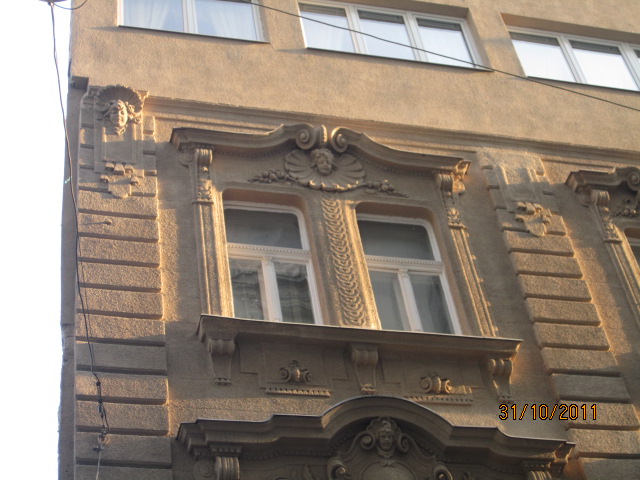
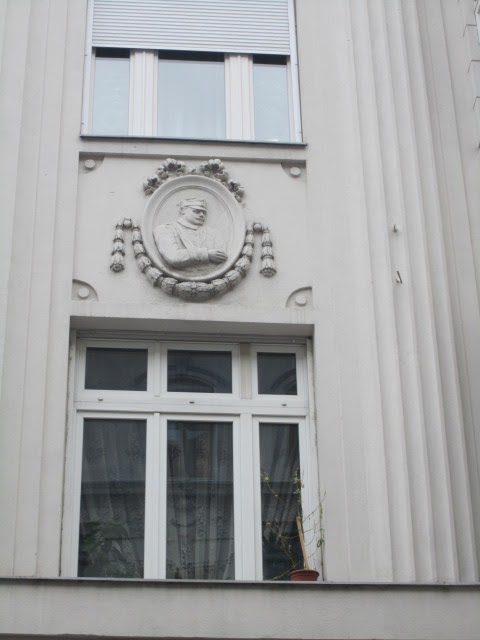
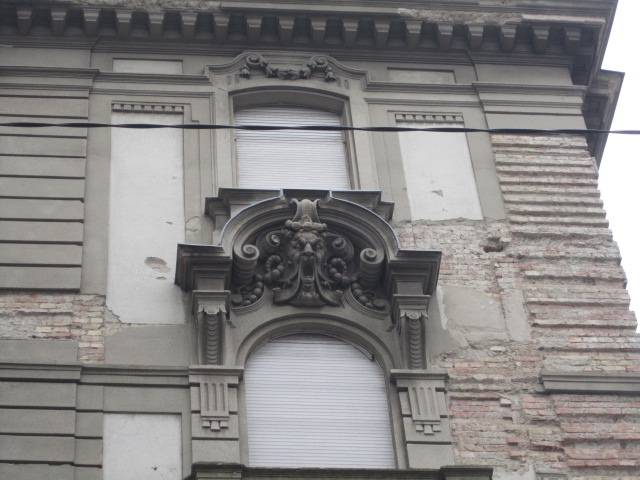
I often think of this question as I look up at all the myriad faces on Budapest's buildings. 'Who were they? Who were they before they were transfigured into stone?'


When the first set - the godmother's son and daughter-in-law - arrived, we gave them drinks and chatted. The wife asked who else was coming to dinner, and I told her the name of our landlord, saying that he and his wife would be there quite soon. 'Who was she?' was the woman's immediate inquiry, 'Who was she before she was married?'
I often think of this question as I look up at all the myriad faces on Budapest's buildings. 'Who were they? Who were they before they were transfigured into stone?'








Subscribe to:
Posts (Atom)